winter plants: Paeonia (Peony)
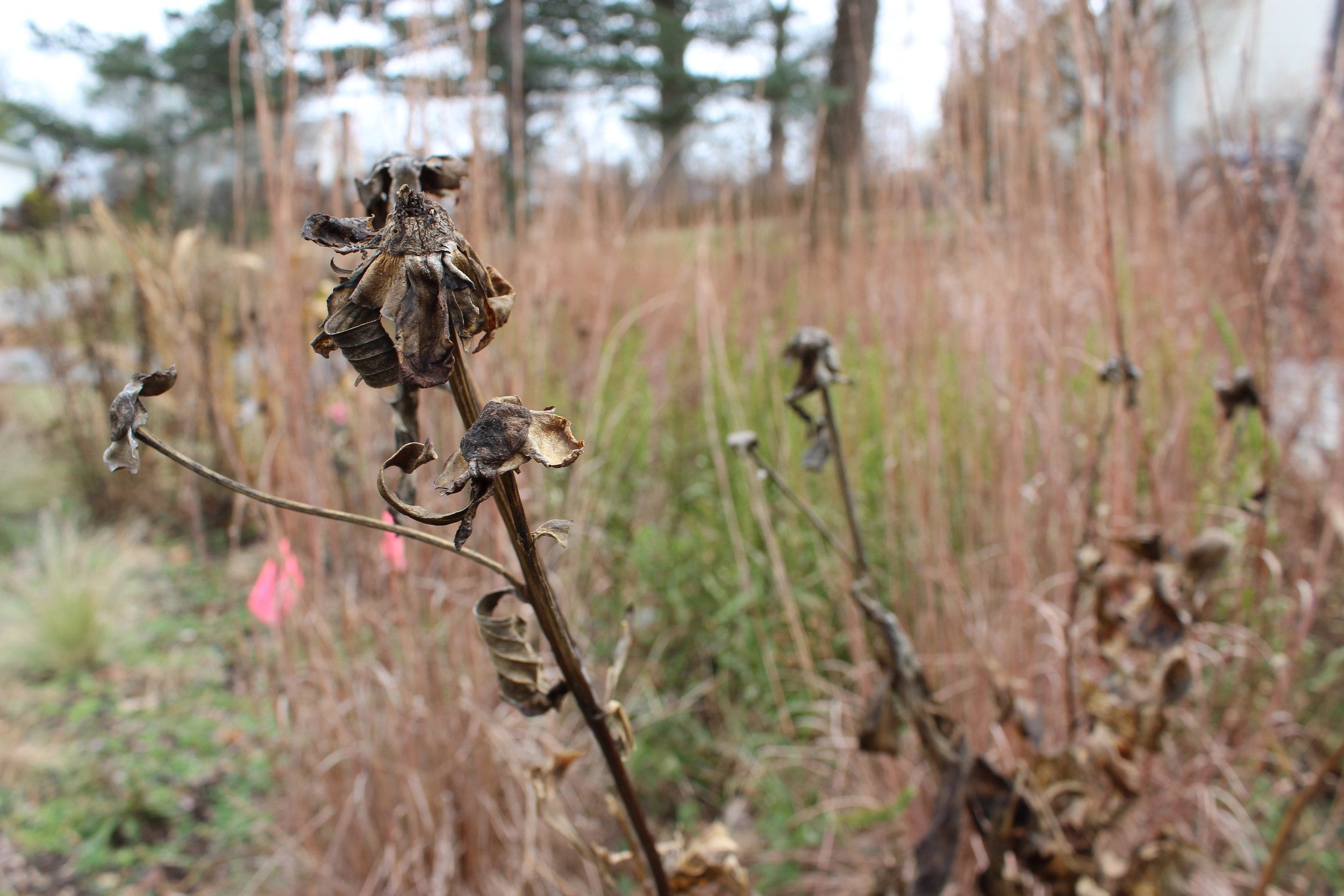
copyright: chambersdesign - Peony in Winter
Paeonia, aka Peonies, are famous for their enchanting vibrance in spring. With their range of colors and sizes, they are a favorite for clients as well as an ideal choice for bursts of pink, white and yellow In April and May. Not strictly native to the eastern US, paeonia is a perfect example of a native-ish plant - with equal parts of attractiveness while exhibiting no negative characteristics. Yet, one of the hidden secrets for this gem is that they are an incredible Winter Plant that well after they have bloomed, they give depth and uniqueness when the snows come.
Winter Wonder
Winter is a unique view into the life cycle of plants. Perennials are traditionally cutback in November, but this eliminates 4 to 5 months from a garden’s interest and robs us of a more in-depth relationship with the natural world. During my journey into the landscape design & construction, there’s been no bigger surprise than how peonies offers us a view into this looking glass.
I have to admit that when I first started working with plants and landscapes, I didn’t really like peonies. I saw them as leftovers from an olden thyme of rose bushes and fruit trees. In my head, they were the exact opposite of what a natural ecoscape was suppose to be. But clients continued to ask for them, and so I needed to better understand how they could be worked into a composition. They have a long, long history of cultivation dating back thousands of years. Because of this, the varieties are vast…and has caused some of the reasons for my misgivings.
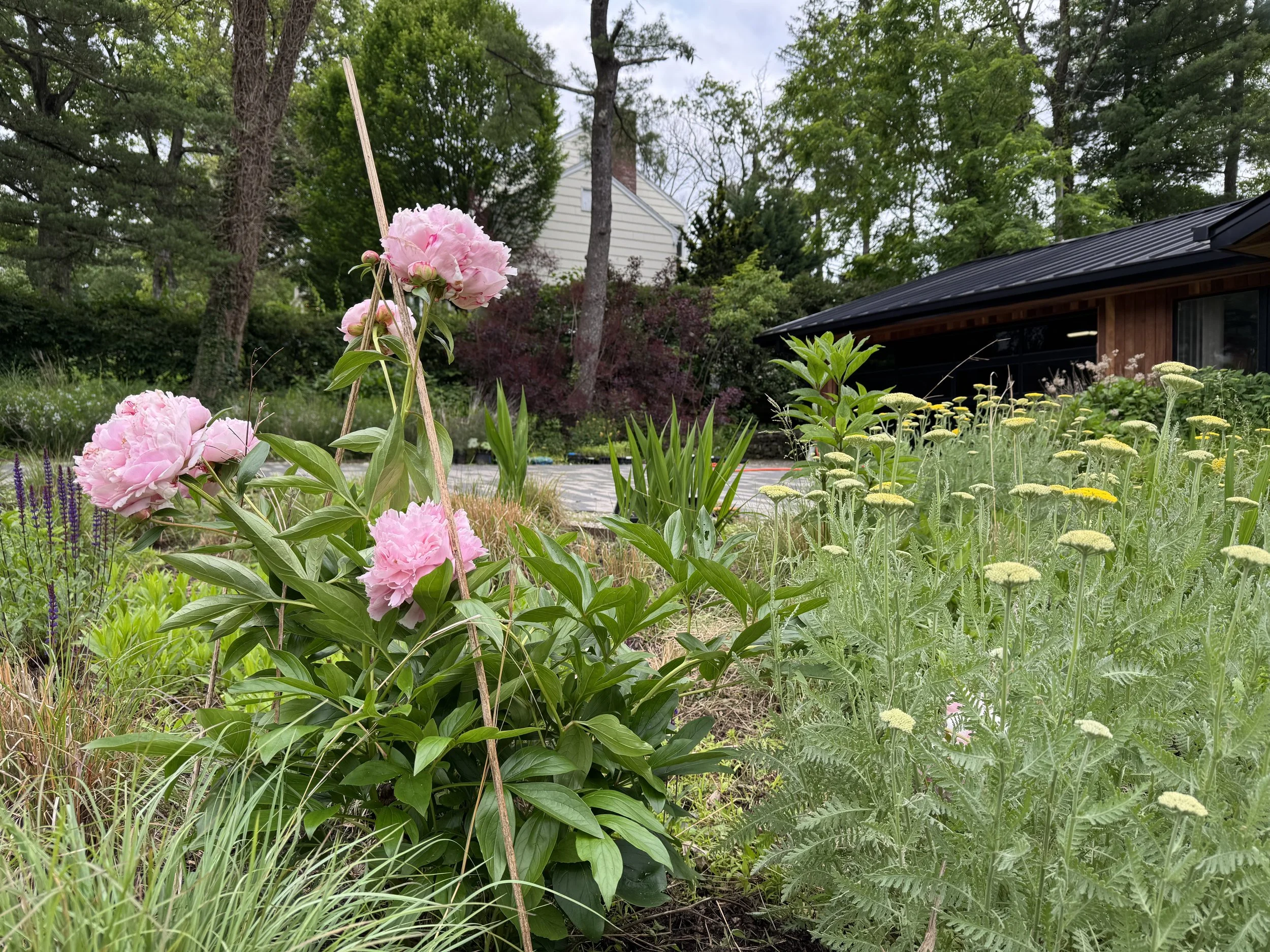
copyright: chambersdesign - Staked Flower
For example, they flop. Breeding for specific traits has generated specimens with gagantic blooms atop really thin stems. Just a little rain, and they end up face down in the dirt. To rectify this, you have to stake or cage them - and this additional effort is what had always given me the sense they aren’t really great options to use. But clients asked for them and so I used them. They are kinda like a little puppy in that way. I’d research them and discover different types and hues - I’d source them with different nurseries, then I’d plant them witnessing the folds and curls of their pellets firsthand. Slowly, due to close proximity, I fell victim to their puppy eyes and ended up purchasing a few for my front yard garden.
I installed them during the summer, so they didn’t have a flower at the time. But when the next April came, there they were…the dark green leaves and the skinny stems with a rosebud atop it. I was hooked - a week or so later, the peonies were in full bloom. However, after a very short storm, they were kissing the soil like a solider back from war. With a little bit of a “told you so” voice in my head, I used a couple of sticks to prop it back up - and like magic, it was majestic again. Then something unexpected happened.
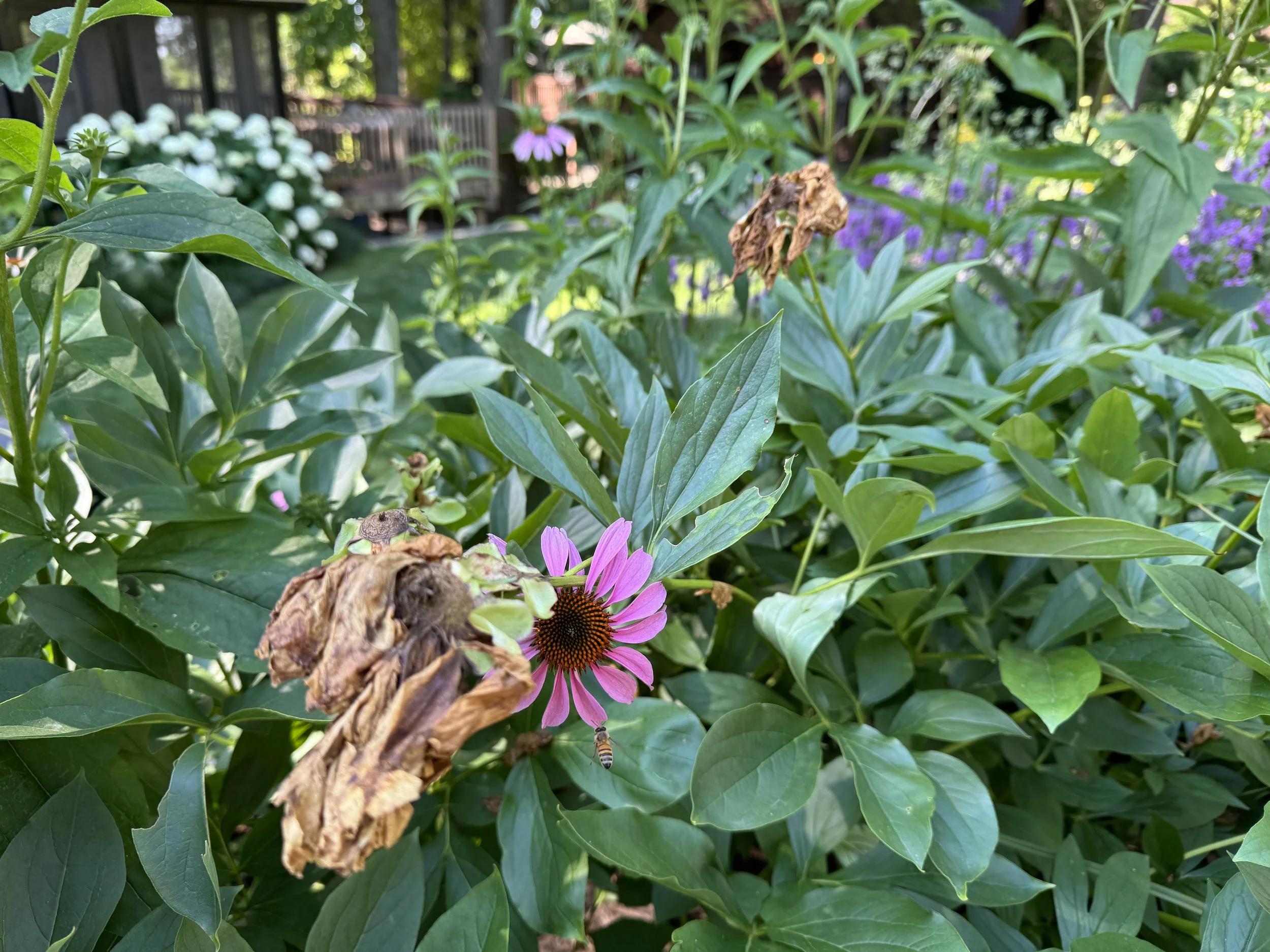
copyright: chambersdesign - Spent Flower
After a couple of more weeks, the flower began to stiffen and slowly fold into itself making what looked like a burnt umber fist…or wooden knot from a tree. It was a big surprise because until then, I had never seen a peony as anything but a flower - but in front of me was a different perspective. When the walnut toned mass standing next to other blooming plants like Echinacea or Achillea, the peonies adds to the complexity of a space - and gives contrast to the bright shades of summer.
Then, winter came - the clouds cover the sky. The temperatures drop, and all the leaves from the trees had disappeared. Almost like a ghost, peonies remained like an Oldenburg sketch of a bicycle. The remaining pellets withered into chestnut lines and its leaves merely holding onto its stem due to luck versus nature. This part of the paeonia’s life had been hidden from sight. I’d never read nor seen on any of the biggest names in gardening describe this plants as a winter option - but obviously it is.
It’s tricky to incorporate the winter spirit of peonies with its spring counterpart, but I’ve found groupings of 3 to 7 together with some grasses between an odd number of them is ideal to create an informal block that works well. Staking is mandatory but if done in a non-mechanical way, the stakes can add to the artistic flare as a gesture versus an obligation.
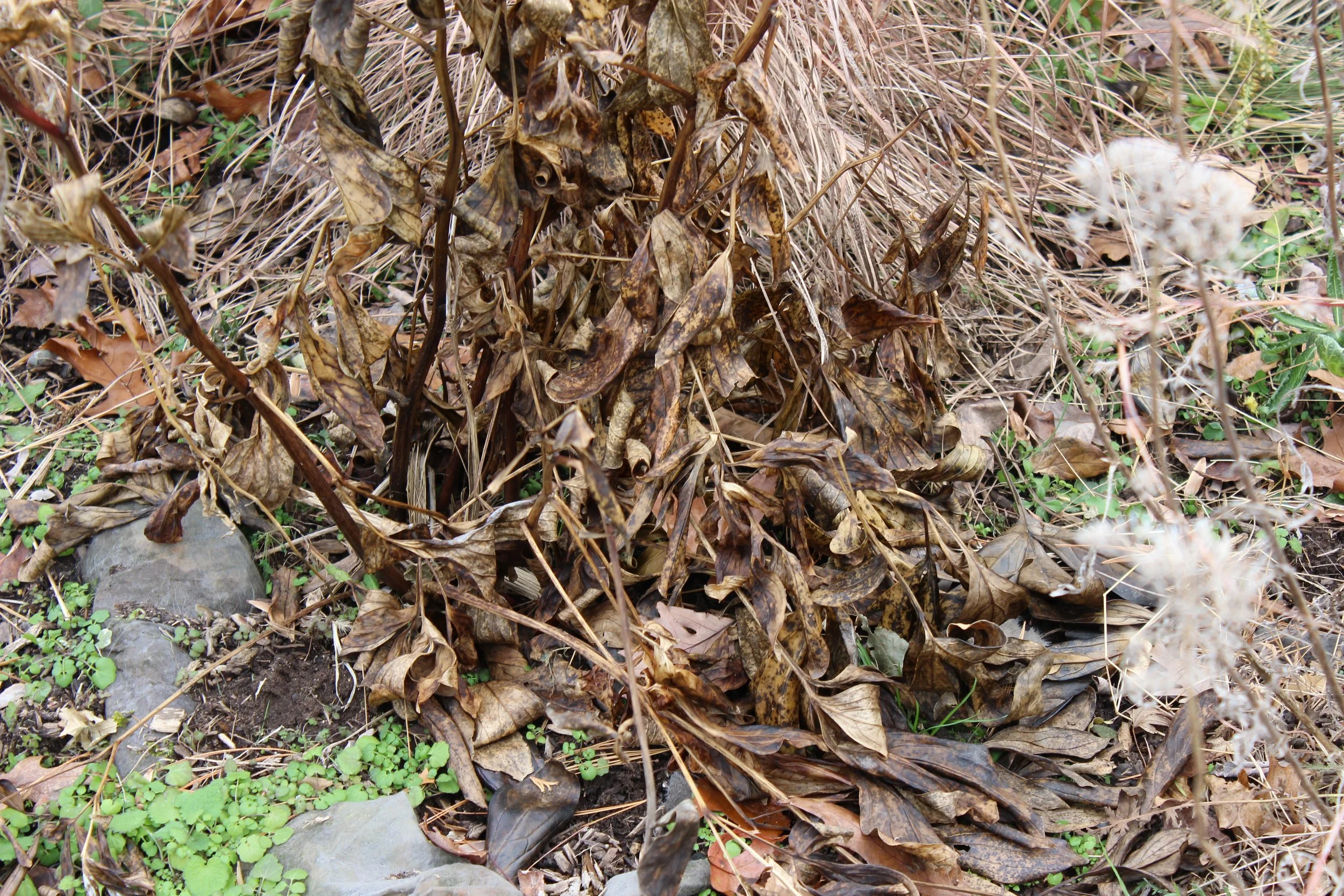
copyright: chambersdesign - Leaf Soup
During winter at the flower’s base, the leaves gather into a kinda soup. Moist from rain yet dry from a lack of evaporation, they decay right before your eyes. Within them, there is other life. Little insects find housing from the cold. The leaves aren’t exactly pretty, but as part of the composition - they can function as a welcomed respite inviting you to linger just a little long before racing inside to get warm. Come March, everything will be gone…and by May (or maybe June), the freezing weather will be forgotten as the new blossom of the peonies curtsy if not supported.
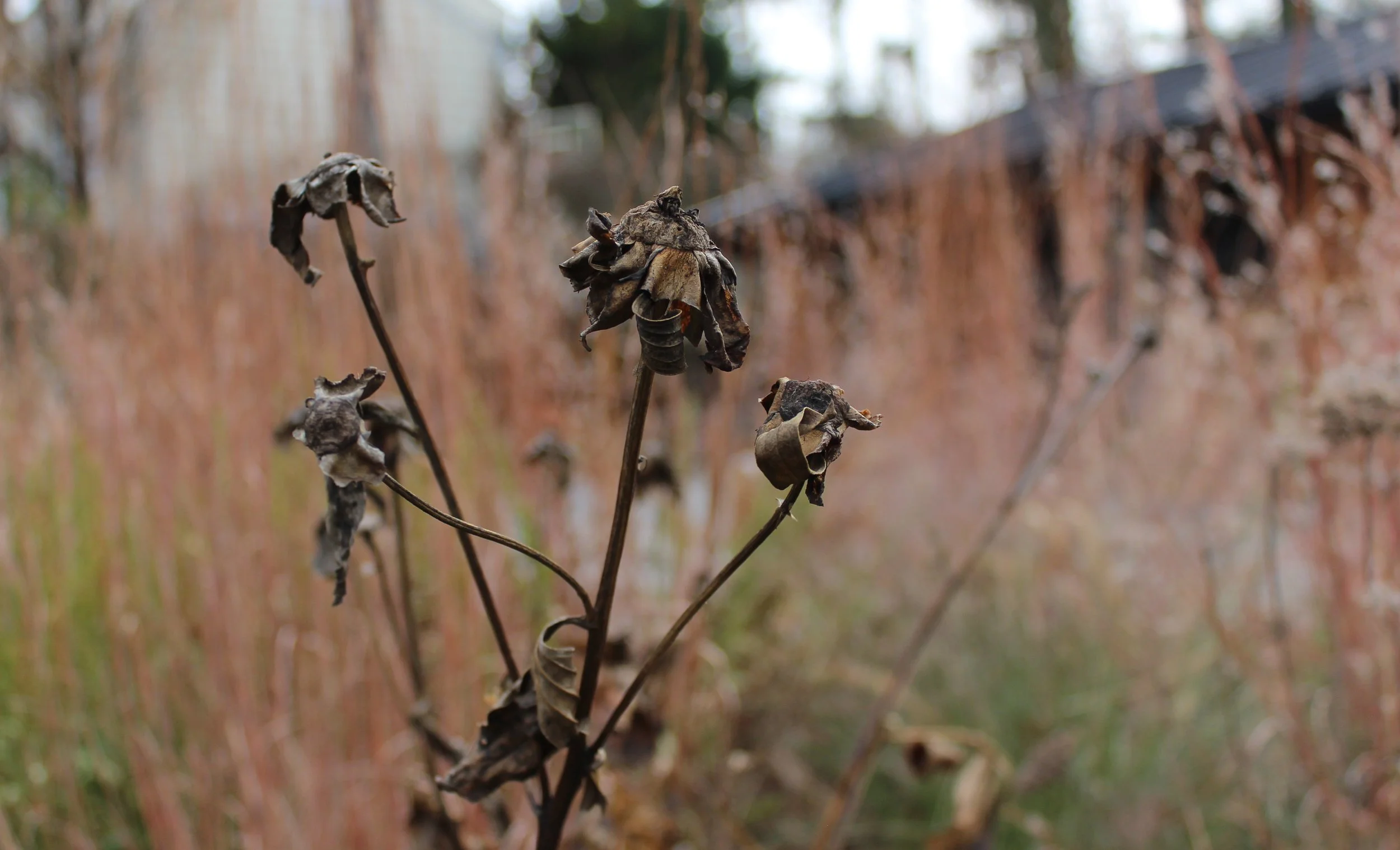
copyright: chambersdesign - Winter Plant
The moral of the story: don’t cut back your paeonia in November - they are a year-round discovery.