RestorIng the Rain Park in South Orange

Photo by: chambersdesign
For about a year now, we started to restore the Rain Park located in South Orange, NJ and it’s been a big success. We set very conservative goals for the first year to not over promise and to build a supportive group around the project. We not only achieved our targets, we are flying high.
What we Accomplished this Year (2025)
The primary goal for this year was to begin removing and suppressing the mugwort. It was allowed to spread extensively during the years after the pandemic - and had really overtaken several areas in the garden. In the fall of 2024, we had put some fabric down to manage a few spots and to reduce our need come spring and summer of weeding those areas. Mugwort is a difficult plant to eliminate - but I’ve learned a lot about it this year. it will be a multiple year process to get it under control. And even after it is eradicated by 90 to 95%, attention will need to be paid to not giving it a way back into the space. During the spring of 2025, I had a crew go through the entire garden and cut the weeds back. We had planned to only visit the Rain Park 3 to 5 times between April and October and perform full-scale maintenance. During my first visit, I realized that the mugwort was actually worse than I thought, and that wouldn’t really be a successful strategy. I decided to go to the site everyday Monday through Saturday from May to June and then again from Aug through September to manage the mugwort. Everyday, I would trek down and spend between an hour to 2 hours between 7am to 8 or 9am and just weed.
There’s a certain peace that I found doing this. I would listen to music and crawl about the Rain Park pulling all the mugwort I could find. We did have volunteers on the site to help with weeding just about every 2 weeks or so. This was helpful and acted as a supplement, but my visits everyday became a central key to dealing with the mugwort. I’ve weeded mugwort in the past, but never to this extent. I became very familiar with the plant. The way it smelled and its habits. I had always thought of it as a killer weed because of the way it moves into an area and takes over. I had previously seen how it comes onto a site…first, in small individual stems and then as an explosion of large groups after 2 or 3 years of no management. But at the Rain Park - I realized that its not as ferocious as I first thought. It’s just a plant and doesn’t have special diabolical traits. It’s so success by the way it bullies other plants and kinda takes up the space around another plant just enough to not let it grow fast enough to compete. When I pulled the mugwort, the neighboring plants would spring back to life and grow as if it had never been there.
Just as a note - going in the morning is really a good idea for 2 reasons: 1. It’s not hot yet and 2. The bees and other pollinators are really out yet. When I would miss my early morning window and went later in the day, I almost always got bit or stung by something.
What are the Flags
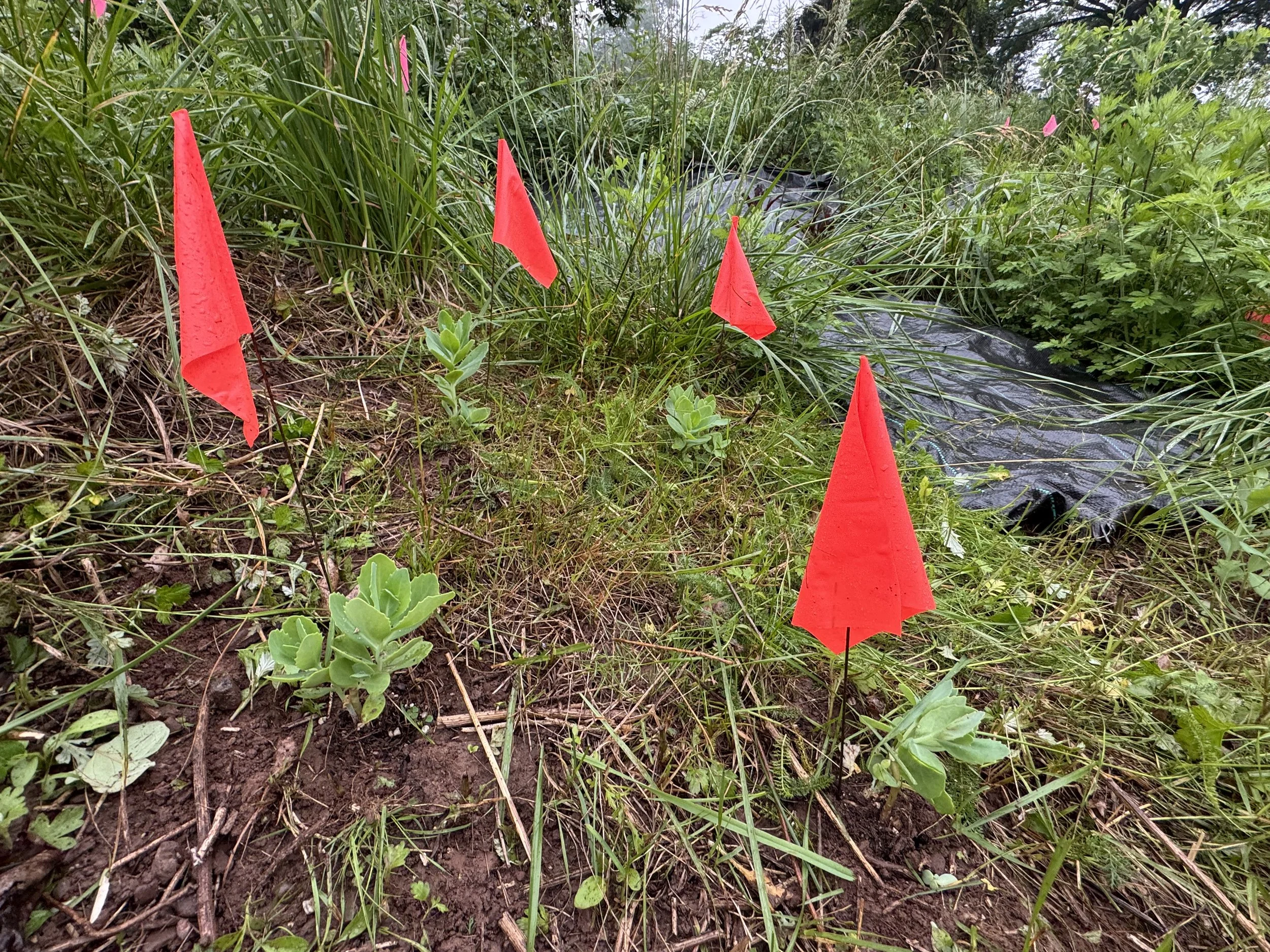
Photo by: chambersdesign
One of the big questions I’ve gotten is “What are the Flags for?”. The flags are used to show where new plants are installed. The amount of undesirable grasses and weeds in the Rain Park is still high - so it’s important volunteers can steer clear of damaging the new perennials. I personally like the way the flags make a visual impact on the space - and help to give attention to the work we are undertaking. Overtime, we will not need the flags as the plants mature. For the foreseeable future, they will be in the Rain Park flapping around. If you go to the site, you can’t miss the flags. They look like are from a 1980’s Wham video. Hot pink and bright orange - they are marker flags attached to a thin piece of steel that you can easily drive into the ground.
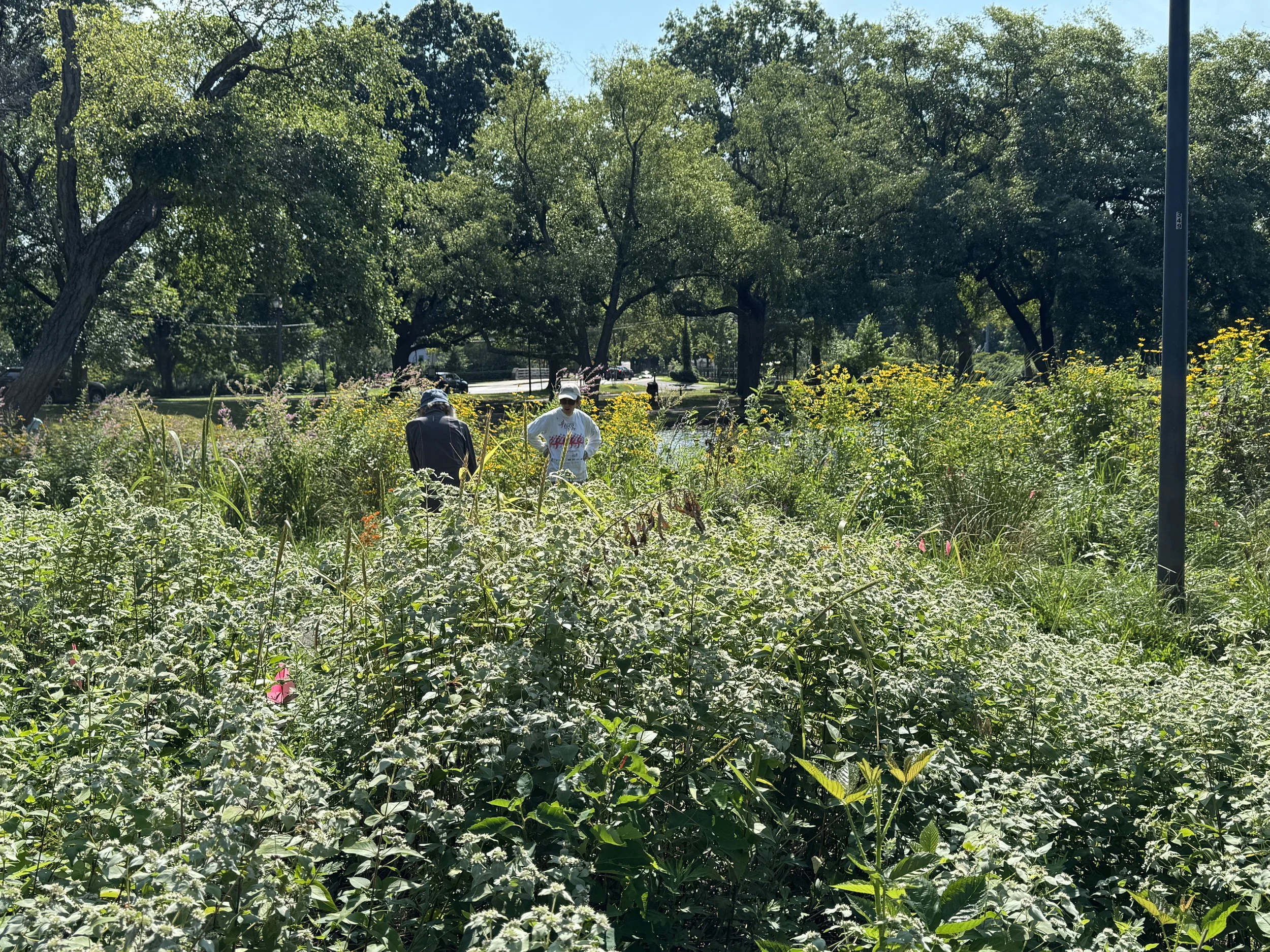
Photo by: chambersdesign
We planted more than 500 plants this year - with more to come. Some of the new plants in the garden include Amsonia hubrichtii, Baptisia x Decadence® 'Vanilla Cream’, Molinia caerulea ‘Skyracer’, Perovskia atriplicifolia, Echiacea purpurea, Eupatorium coelestinum, Penstemon digitalis 'Huskers Red’, Phlox paniculata ‘Jeana’, Physostegia v. 'Miss Manners’, Pycnanthemum tenuifolium, Silphium terebinthinaceum and Sedum 'Autumn Fire’. All of these were planted in the spring of 2025. We did a second planting of around 300 plants in the late summer to early fall that included Aster oblongifolius 'October Skies’, Asclepias tuberosa 'Hello Yellow’, Amsonia hubrichtii Butterscotch, Schizachyrium scoparium 'Smoke Signal’, Liatris spicata, Eryngium planum ‘Blaukappe’, Asclepias incarnata 'Ice Ballet’, Aster tataricus ‘Jin-dai’, Eupatorium hyssopifolium, Veronicastrum virginicum, Monarda fistulosa, Scutellaria incana, Panicum virgatum ‘Northwind’, Perovskia atriplicifolia 'Blue Steel’ and Helenium autumnale 'Helena Red Shades’. All in all, more than 20 new species and varieties. The plants from the spring benefitted from the incredibly wet months through June. The second plantings has struggled a little more due to the drier climate of September and October in New Jersey.
Future Plans
It was a successful year - and we accomplished more than I thought possible. The group of dedicated volunteers has made it more enjoyable and fun to work on the Rain Park. We recieved lots of compliments on how much better it looked this year. With less mugwort, we had more flowers taking main stage. But, we can’t rest on our laurels, for gardening is not a forgiving sport. The mugwort isn’t completely gone - it will need to be managed next year with the same time and effort given to it these last few months.
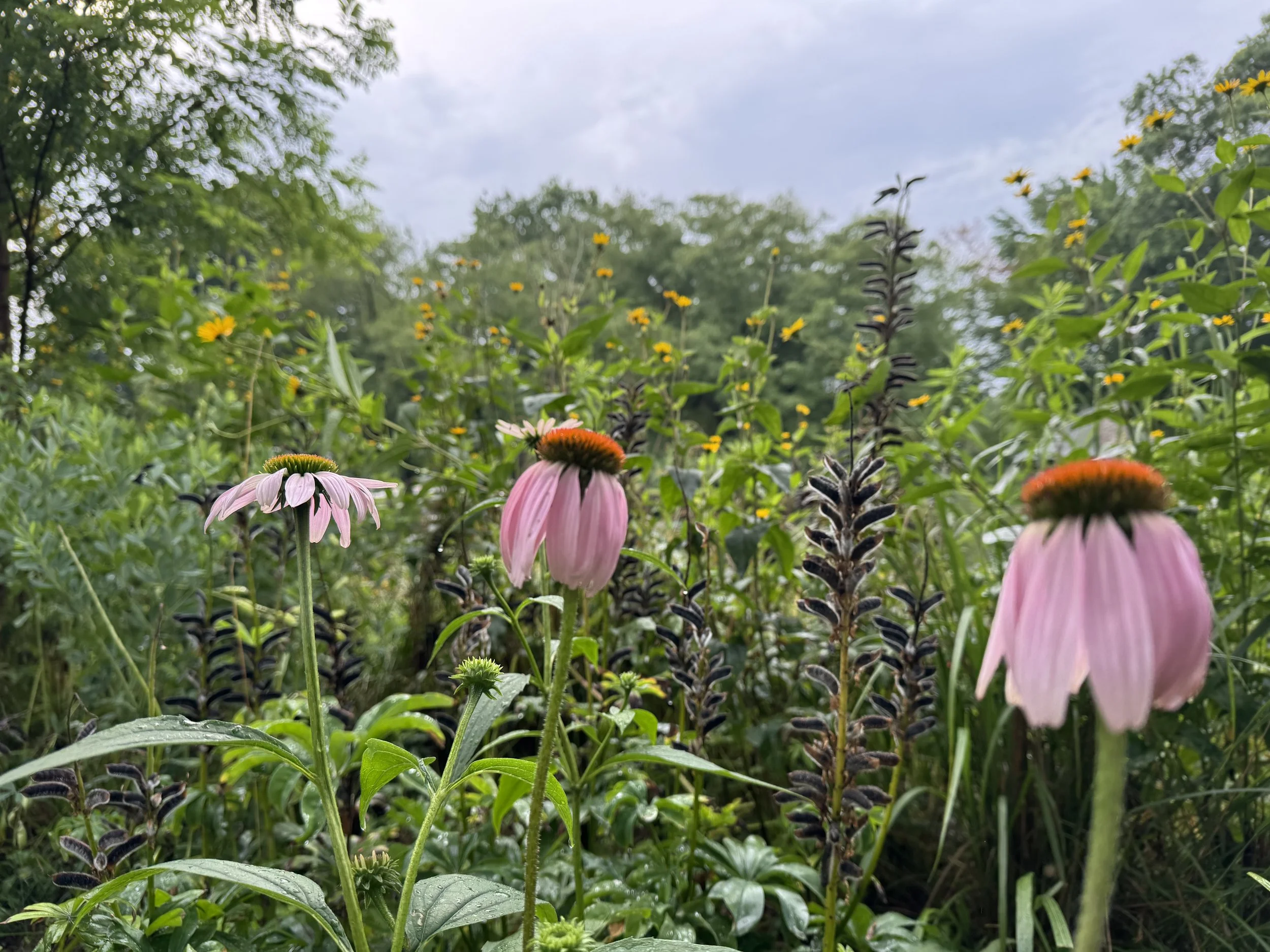
Photo by: chambersdesign
We are already planning more plants in the ground as soon as spring arrives. I have already start to procure several grasses for the Rain Park - such as Bouteloua curtipendula, Chasmantheium latifolium and Elymus hystrix. We will be doing a big late winter cleaning before the plants go in. That will take place between mid- to late March. We are always looking to bring in new people for this incredible project. We also need to start fundraising so we can buy more plants and make important changes as they come up. If you are interested, reach out.