What is a Rain Park?
copyright: chambersdesign
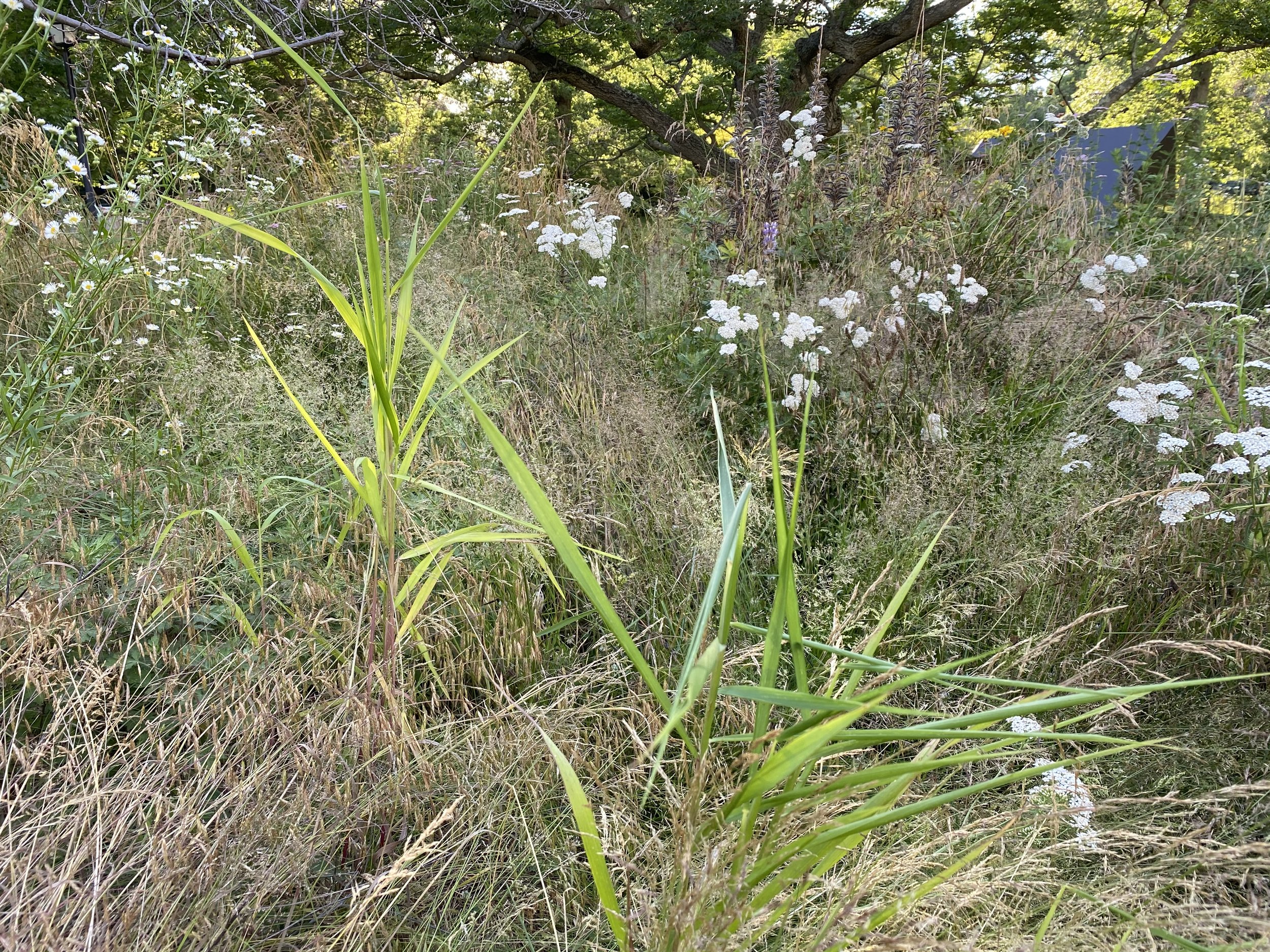
Rain parks are a new way to design & install green infrastructure. They use as many best practices as possible to create habitat and manage stormwater within a single site. This way the benefits multiple and enhance each other. Rain parks transform green infrastructure from a purely functional apparatus into a community amenity. They rectify passed engineering mistakes that negatively impair waterways while using flowers and textures as a tool to achieve large overarching ecological services. Each rain park is designed to draw people into a deeper relationship with nature. These organic forms increase knowledge about botany while eliminating the causation of flooding. It’s a new generation of green infrastructure that sees naturalized landscapes as critical features within our cities, towns and green spaces where people gather together in a common desire to help the environment.
Collective of Best Practices
The term green infrastructure isn’t ancient. It first appeared little more than two decades ago. However, some of its techniques were utilized during the Roman Empire. Berms, for example, are natural way to direct water across a field or into a a stream. Berms have been built for centuries on every inhabited continent. A dug channel made of only dirt is another old method for water management. A bioswale, at its base, is simply a modified dug channels that act like a creek or perennial stream with a few additional features. Rain gardens are likely the most well-known type of green infrastructure. They have become the symbol for the innovation. Hundreds, if not thousands, of grant programs across the United States have funded case studies, guidebooks and implementations for countless rain gardens.
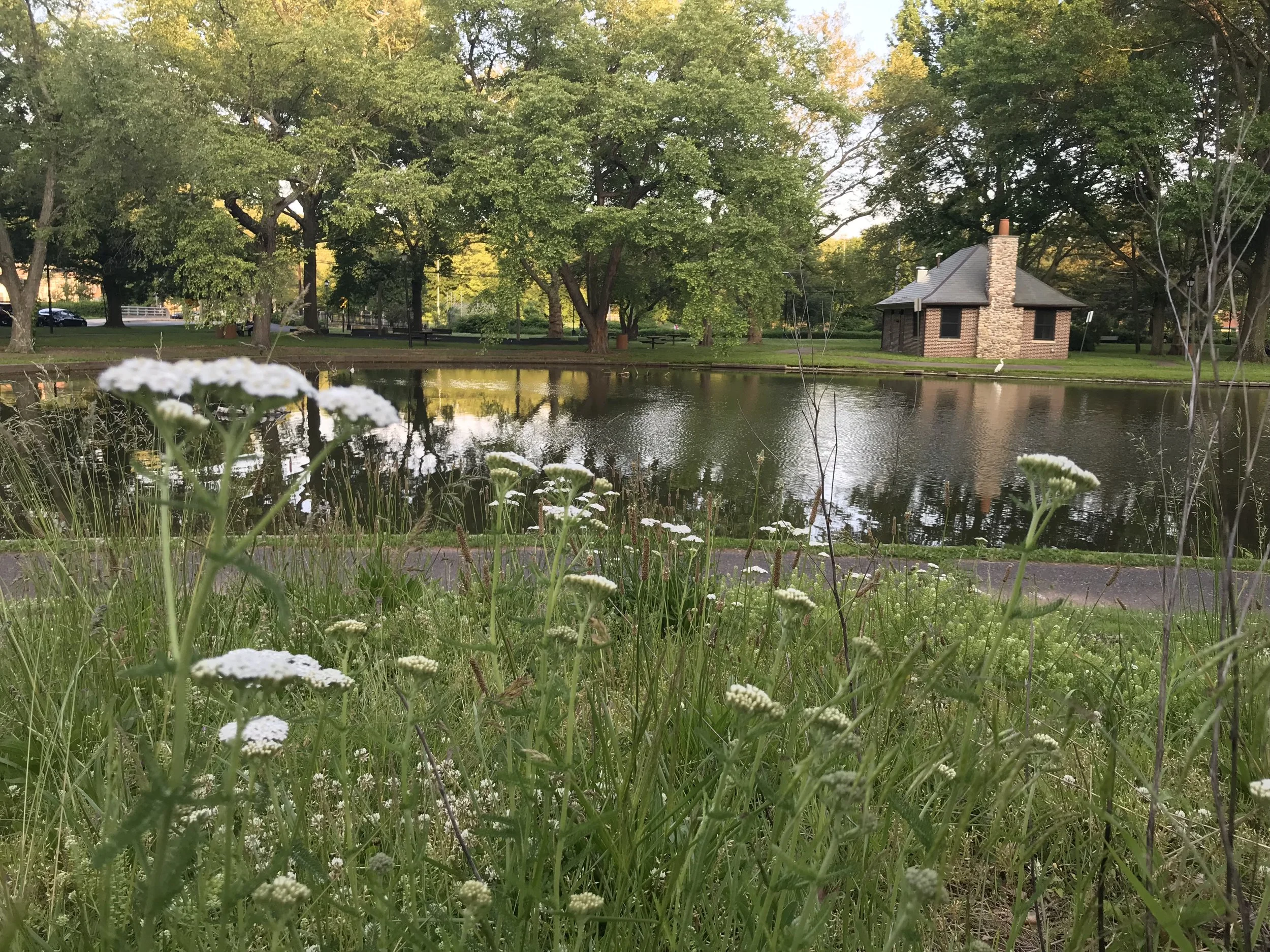
Image of South Orange Rain Park. copyright: chambersdesign
Yet, with so much focus going to one specific approach, many alternatives exist. Berms are a strong candidate for addressing stormwater. A berm is, at its simplest, a mound of dirt that slows down and delays rainwater from just pouring into a storm system or waterbody. Likewise, riparian strips (or buffers as they are often referred), is a densely planted area adjacent to a waterway. The vegetation in the strip slows the flow of rain while filtering it moderating its speed entering a river and drainage basin.
New Forms of Gardening
Plantings are an essential element for green infrastructure - and thereby important to rain parks. New forms of gardening have exploded during the same timeline that green infrastructure has become popularized. Native plant and pollinator gardens have popped up at schools, town halls and communities around the world at a greater rate than rain gardens. These gardens are all driven by the New Perennial Movement (NPM) - that is a focus on using perennials and grasses as the body of a garden. Famous projects like the High Line in NYC is a great example and a reason so many people have flocked to this way of planting. This approach is unique due to both how it uses flora as well as the types used. The “how it uses flora” is in the number and density. In the past, you might create a garden and use 4 or 5 potted plants. NPM suggests to multiple that by 10, 20 and 40. For example, instead of spacing an Echinacea 24 inches apart, try 8 inches apart. Don’t just plant them in a straight line, instead introduce ideas such as the drift, block and matrix. A drift is taking a plant and creating a gesture of motion with it through an entire bed or across an entire landscape.
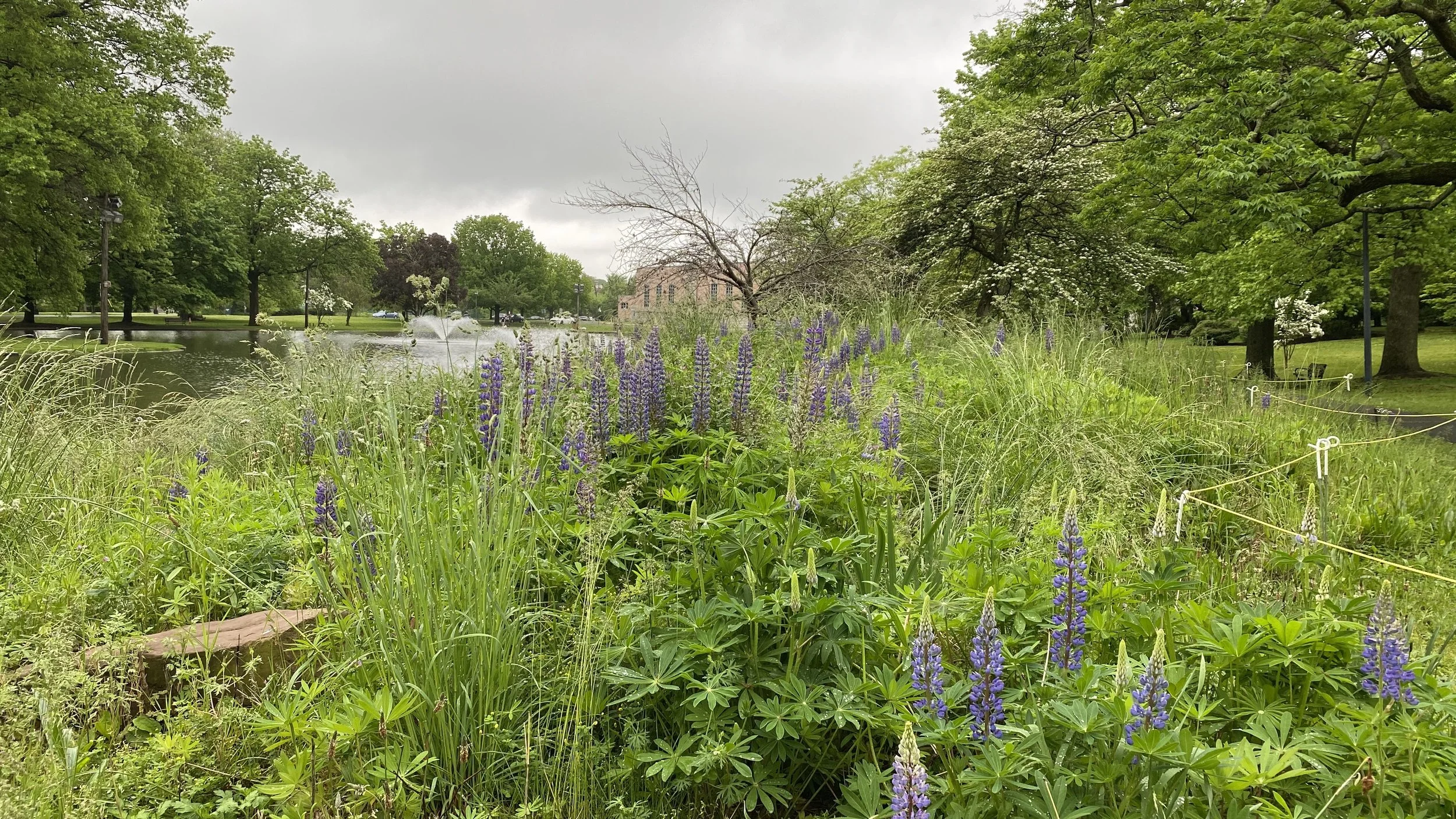
Image of South Orange Rain Park. copyright: chambersdesign
The block is a densely planted spot of the same plant within a composition while a matrix is a more ephemeral way of defining a space - typically with a grass dominating the installation. All of these design elements are couple with other characteristics never widely used before. Such as seasonality (when a plant blooms in relation to another plant) and how they captivate the viewer during dormancy. Perennials have an artistic quality even in the dead of winter when the stem, pellets and leaves have all twisted into hues of burnt umber and chocolate.
Pollinator and native gardens are dominated by what I call NATIVE-ISH plants - that is, plants offering special ecological benefits to the surrounding environment without any unforeseen negatives consequences. Native-ish plants include natives, cultivars, nativars and adaptive plants. Native-ish plants expand the potential for creating ecological services with a garden while enhancing the opportunity to have a highly visual articulation.
copyright: chambersdesign
The goal should always be to use species that are good neighbors to the overall world around them. Because plants are so important to both green infrastructure and NPM gardens, it only makes sense that they combine forces. Yet, this isn’t what has happened. Lots of rain gardens install plants as specimens spaced too far apart in straight lines as if they are farm crops versus a natural environment. There’s typically no real attention to seasonality or dormancy. Design elements like drifts, blocks or matrix are never used. Rain parks see plants as a driver for artisanal performance.
Hey! I’m a Rain Park
The South Orange Rain Park is a collection of these best practices where stormwater management, habitat creation and native-ish plants merge. There are dozens of species of flora in it. Grasses represent more than 10 varieties presense. The genera of Panicum and Calamagrostis have two or more species growing in it. The genera of Liartis, Monarda, Echinacea and Pycnanthemum also have multiple species that make up the park’s biodiversity. Through the restoration efforts started in 2024, we have put hundreds of new plants in the ground with the aim to amplify its seasonality, emotion and texture. Already, we see success. Big and Little Bluestem have become incredible spectacles throughout the fall in 2025. The Big Bluestem has swayed at 7 feet tall while the Little bluestem adds a bronze splash of color. All of these plants have attracted people, birds and insects. In turn, all of this attention helps to regenerate life for next year.
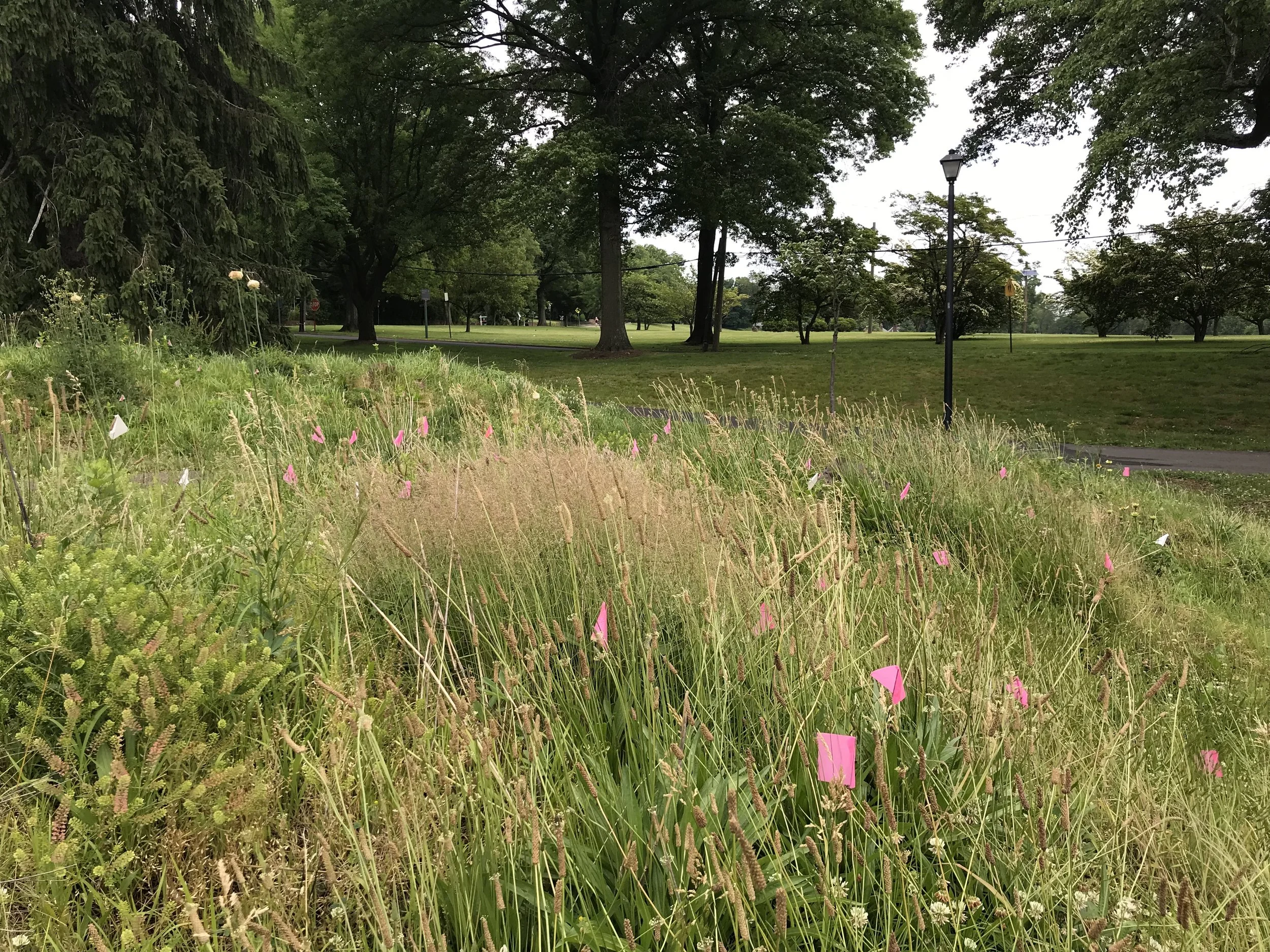
The rain park has eight mini-rain gardens within it - all different sizes. The outer edges of the mounds act as berms slowing and delaying rainwater coming down the slope toward the Duck Pond. All of the vegetation acts as riparian strips.
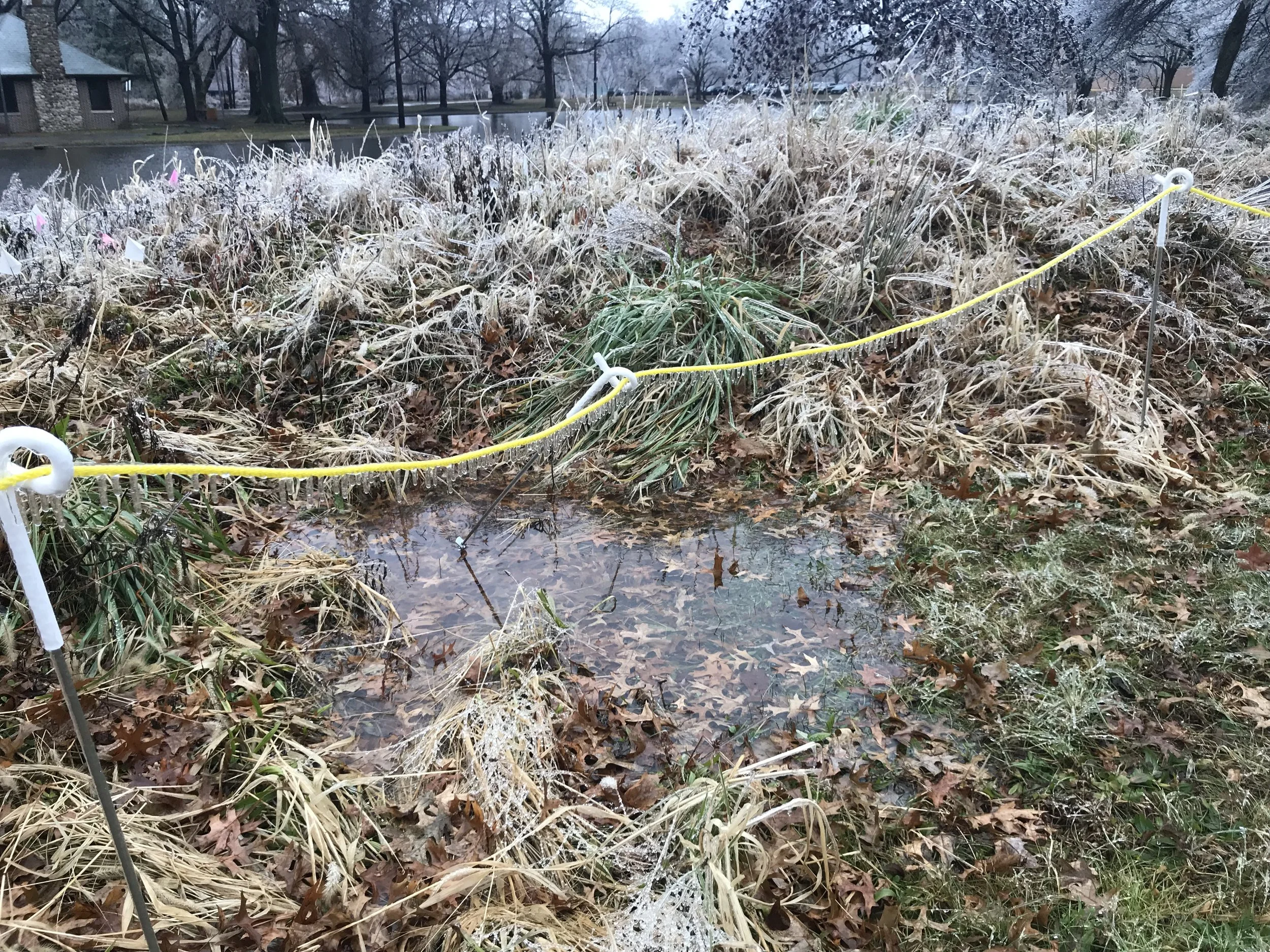
Example of mini-rain garden inside Rain Park. copyright: chambersdesign
The variety of slopes, depressions and flats within the rain park mimic a comprehensive landscape that gives rain a chance to infiltrate before going toward the pond. When we constructed the rain park, we used different sized stones to form the mounds. The different rock sizes creates void spaces that allow large amounts of rainwater to be absorbed quickly.
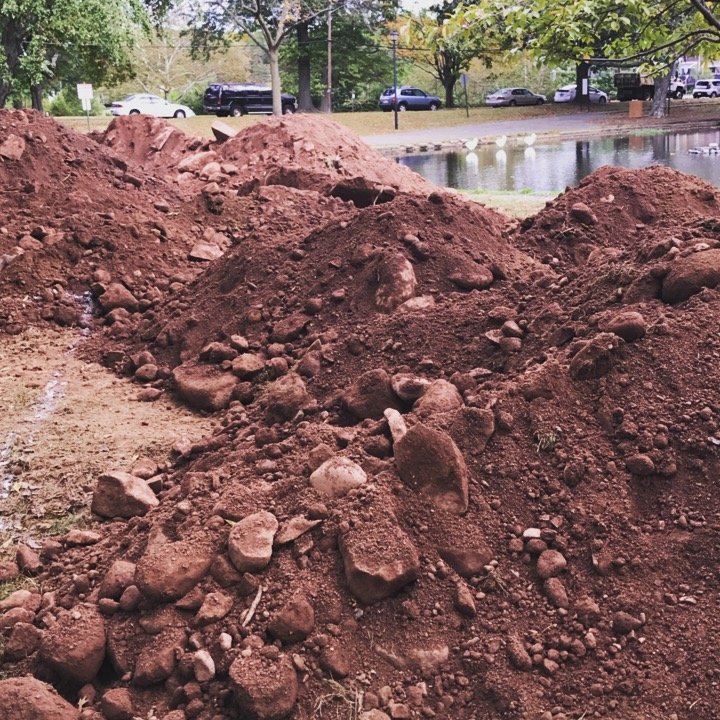
Image of stones used for mounds. copyright: chambersdesign
These empty spaces give the roots of plants a way to grow deeper faster to find needed moisture. In effect, the SO Rain Park acts as a giant catch basin moving surface water underground at accelerated rates.
But the plants aren’t just being pretty - they are providing many important ecological services. The water is filtered as it waits to be absorbed or just bumps them on its way to the pond. The roots aerate the soil cracking open new pathways for rain to be swallowed by the land. Water isn’t the only thing that ventures inside - air flows deep inside delivering oxygen, carbon dioxide and nitrogen helping microbes and subterranean organisms to flourish. The richness of this life makes the soil more alive and fosters denser plant coverage atop the mounds. We estimate that more than 400,000 gallons of rainwater washed through the South Orange Rain Park in 2025. The Rain Park is the most biodiverse garden within the Village. This biodiversity is shared far and wide acting as a seed distribution center sending native seed downstream - as investments into the future. Literally, since the first year the rain park was completed, it has cast millions of seeds into the surrounding world.
Collective of People
Yet, the quality that shouldn’t be overlooked is that the South Orange Rain Park isn’t just a piece of infrastructure. It’s a community space - where volunteers come to help keep it weeded and maintained. Volunteers spent over 100 work-hours in the SO Rain Park this year. During workdays in the sunny spring and summer days, people gather, pull mugwort and chat about their lives on an array of topics from family, to protests to aspirations for future hopes. The ages of volunteers ranged from high school students to senior citizens. Friendly faces are as valuable as ecological health. This gives voice to an unspoken truth - our differences dissolve when focused on a common goal. Nature is the great equalizer. Flowers always outperform the worst news of the day.